
How Delaware Homeowners Can Prevent Basement Flooding Before Heavy Spring Rain
Langhorne, United States – June 17, 2026 / Aqua Dry Basement Waterproofing /
Don’t wait for the next severe mid-Atlantic storm to reveal a hidden failure in your basement water mitigation system. Learn how to run a proactive 21-point system audit today.
The Importance of Proactive Water Mitigation in Delaware
Spring across Delaware brings beautiful blooms, but it also introduces intense seasonal weather risks. Across New Castle County and the surrounding tri-state corridor, heavy seasonal rainstorms paired with rapidly shifting water tables place incredible stress on residential foundations. For homeowners, a basement is a valuable asset, but it is also the lowest point in the structure—making it highly vulnerable to hydrostatic pressure during severe weather events.
Many homeowners assume their basement water management system is in perfect working order simply because they haven’t seen a flood recently. However, a long, dry winter can cause mechanical switches to lock up, allow fine sediment to block drainage lines, or cause backup batteries to lose their storage capacity. Testing your sub-floor drainage system before a storm hits is the only way to guarantee your home stays safe. At Aqua Dry Basement Waterproofing, we believe the best time to find a system vulnerability is during a dry afternoon, not at 2:00 AM during a torrential downpour.
The Homeowner’s Sump Pump Diagnostic Checklist
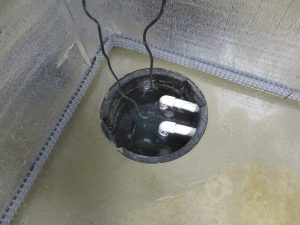
Your sump pump is the heart of your interior drainage system. If the pump fails, water will quickly back up into your trenching and flood your basement floor. Use this step-by-step diagnostic process to confirm your pump is ready for heavy spring rains:
1. The Mechanical Float Switch Test
The float switch is the component that triggers the pump when water rises. Over time, these switches can become stuck or catch on the side of the basin wall. To test it safely, remove the sump pit lid and slowly pour a five-gallon bucket of clean water into the basin. Watch the float rise smoothly along its vertical rod. The motor should trigger automatically before the water level reaches the intake ports of your perimeter drain pipes, and it should shut off cleanly once the pit is empty.
2. Electrical Line Auditing
Inspect the power cords running from your sump pump. A primary pump should always be plugged directly into an independent, dedicated GFC_I outlet. It should never share a circuit breaker with high-draw appliances like deep freezers or workshop tools, and it should never be connected to thin, ungrounded extension cords, which can overheat and short-circuit under heavy loads.
3. Debris Basin Cleansing
Unplug the pump and look down into the bottom of the sump pit. Small stones, mud, concrete dust, and silt can wash into the basin over time. This debris can get sucked into the pump’s intake screen, jamming the impeller wheel and burning out the motor. Manually clear out any accumulated sediment to ensure clear, unrestricted water flow.
Auditing Your Emergency Power: Testing Battery Backup Systems
Severe spring storms frequently knock out local power grids. If your primary sump pump relies solely on standard household AC power, a grid failure will leave your basement completely unprotected. This is why a high-capacity battery backup system is a vital line of defense.
To test your backup array, unplug your primary pump’s power cord from the wall outlet, then pour another bucket of water into the sump pit. The secondary backup pump should trigger immediately using its independent battery power. Listen closely to the motor: a loud, struggling hum indicates a weak charge or a failing battery cell. Most deep-cycle backup batteries have a lifespan of three to five years; if yours is nearing this window, it should be replaced before storm season hits.
Inspecting Interior Sub-Floor Drainage Outlets and Discharge Lines
An interior French drain can only handle water if the discharge lines can safely carry it away from your foundation. Walk outside your home and locate where your sump pump pipe exits the foundation wall. Ensure the termination point is clear of autumn leaves, garden mulch, soil accumulation, or pest nests.
Additionally, check for winter freeze damage or buckling along the line. If your discharge pipe terminates too close to your foundation walls, the pumped water will simply sink back down into the soil, creating a continuous loop that overworks and eventually burns out your pump motor. Ensure all water discharges onto a downward slope well away from your home’s perimeter.
Frequently Asked Questions About System Maintenance
How often should a residential sump pump be replaced?
On average, professional-grade primary sump pumps last between five to seven years, depending on their runtime and local water table demands. If your pump cycles frequently during normal rains, consider scheduling a preemptive replacement before a sudden breakdown occurs.
What does it mean if my sump pump is making a loud humming noise?
A loud humming noise usually indicates either a jammed impeller wheel, a frozen or blocked discharge pipe line, or a failing motor capacitor. This means the unit is drawing electricity but cannot physically turn the impellers to move water out of the pit.
How do I verify if my interior French drain system is starting to clog?
Look for telltale warning signs along the perimeter floor seam (cove joint). These include white, powdery crystalline efflorescence deposits on the brickwork, damp drywall bases, or small trickles of water passing over the slab edge during heavy rain events.
Don’t wait for a major storm to reveal a hidden vulnerability in your home’s waterproofing system. If you want absolute peace of mind this spring, turn to the structural specialists. Contact Aqua Dry Basement Waterproofing today to request a comprehensive, zero-pressure 21-point system evaluation from our expert W-2 technicians, backed by our commitment to keeping Delaware homes completely dry.


Contact Information:
Aqua Dry Basement Waterproofing
473 Bridgetown Pike
Langhorne, PA 19053
United States
Peter Stoch
(215) 432-7122
https://aquadrybasements.com/


