
CHARLOTTE, NC – X-Sense highlights the growing need for whole-home protection as fire behavior in modern households becomes increasingly unpredictable.
Carbon monoxide is one of the most dangerous household hazards because it gives people very little warning. It cannot be seen, smelled, or tasted. A person may be exposed without realising anything is wrong until symptoms begin to appear.
This is why carbon monoxide safety deserves more attention in everyday home maintenance. Homeowners often focus on visible risks such as smoke, flames, faulty wiring, or gas leaks. Carbon monoxide can be easier to overlook, even though it can be produced by common household equipment.
Fuel-burning appliances, fireplaces, boilers, furnaces, gas stoves, and vehicles running near an attached garage can all create potential carbon monoxide risks when something goes wrong. Poor ventilation, blocked vents, damaged flues, or poorly maintained equipment can allow the gas to build up indoors.
A carbon monoxide alarm cannot prevent a leak or repair an appliance. It can, however, provide an important warning when dangerous levels are detected.
Why Carbon Monoxide Is So Difficult to Notice
Carbon monoxide is often described as a hidden threat because people cannot detect it with their senses. There is no obvious smell to warn a household that something is wrong. It does not create visible smoke or leave a clear sign in the room.
Early symptoms of carbon monoxide exposure can also be confused with common illnesses. Headaches, dizziness, nausea, fatigue, and shortness of breath may seem like flu symptoms or general tiredness. This can delay a person’s response, especially during colder months when windows are closed and heating systems are used more often.
The risk is not limited to one type of home. Houses, flats, holiday properties, rental homes, and mobile living spaces can all have carbon monoxide sources. Any property with a fuel-burning appliance should have a clear plan for prevention, maintenance, and detection.
A reliable carbon monoxide detector can form part of that plan. It gives households an alert that they cannot provide for themselves through smell, sight, or sound.
Everyday Sources That Deserve Attention
Many carbon monoxide incidents are linked to equipment that residents use regularly. A boiler may not be serviced on time. A fireplace vent may become blocked. A vehicle may be left running in or close to an attached garage. A portable generator may be used too near the property during a power outage.
Even appliances that appear to be working normally can become a concern when they are poorly ventilated or damaged. That is why annual servicing by a qualified professional is important for fuel-burning systems.
Homeowners should also pay attention to exterior vents. Snow, leaves, nests, debris, or other blockages can affect how appliances vent gases outside. A simple seasonal inspection may help identify problems before they become serious.
Generators require particular care. They should never be used indoors, in garages, or near open windows and doors. Carbon monoxide can move into living areas quickly, even when people believe there is enough ventilation.
Placement and Testing Matter
A carbon monoxide alarm should be installed according to local safety rules and the manufacturer’s instructions. Placement matters because the device needs to be located where occupants can hear it and respond quickly.
Homes with multiple floors may need alarms on each level and near sleeping areas. Larger properties may also benefit from interconnected systems, where compatible alarms activate together when one device detects danger.
Testing should not be forgotten after installation. A detector can only help when it has power, is within its service life, and is functioning correctly. Households should test alarms regularly and respond to low-battery warnings without delay.
It is also important to avoid treating an alarm as a substitute for appliance servicing. Carbon monoxide alarms are an added layer of safety, not a replacement for professional inspections, proper ventilation, or responsible fuel use.
Portable Protection for Changing Environments
Carbon monoxide risks are not always limited to one fixed location. People may spend time in holiday homes, caravans, cabins, rental properties, or temporary accommodation where they are less familiar with the heating system or ventilation setup.
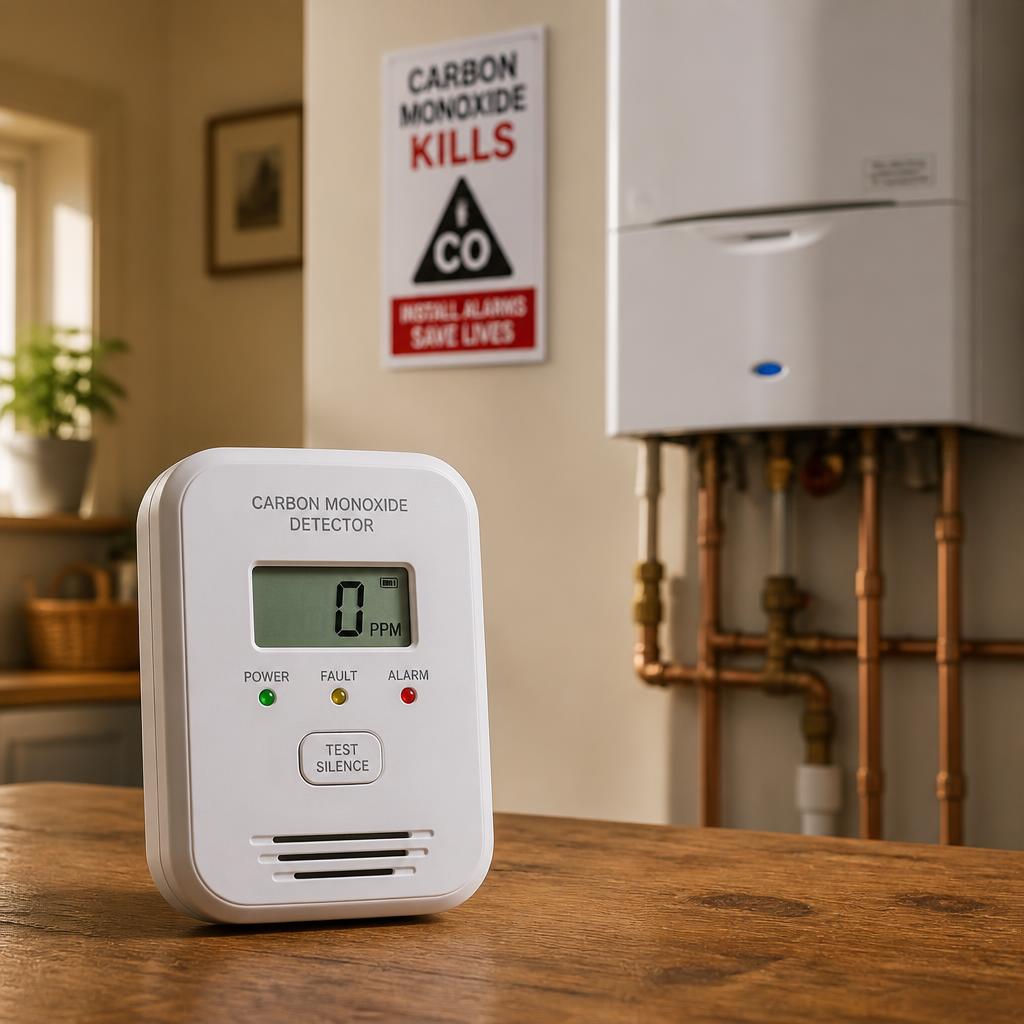
A portable device can provide an additional layer of awareness in these settings. The X-SENSE XC01-R portable CO detector is designed for standalone use at home or while travelling. It includes an LCD display for viewing carbon monoxide levels and uses an electrochemical sensor.
According to X-SENSE product information, the XC01-R has a replaceable CR123A battery, an alarm volume of at least 85 dB, and a stated 10-year product lifespan. Its test and silence button allows users to check operation and temporarily silence the alarm where appropriate.
For households, the value of a portable detector is not convenience alone. It can offer reassurance when staying somewhere unfamiliar or when moving between properties. As with any safety device, users should read the product instructions and follow local requirements for placement and use.
What to Do When an Alarm Sounds
An activated carbon monoxide alarm should always be taken seriously. People should move outside to fresh air as soon as it is safe to do so. They should not ignore the alarm simply because they feel well at that moment.
Once outside, occupants should contact emergency services, a qualified technician, or the appropriate local authority for guidance. They should not return indoors until the property has been checked and it is safe to do so.
Households should also make sure every family member knows what the alarm sounds like and where to meet outside. This is particularly important for children, older adults, overnight guests, and anyone who may need help leaving the property.
A Simple Device With an Important Role
Carbon monoxide remains a hidden household threat because it is easy to miss until an alarm sounds. Regular appliance servicing, safe generator use, clear ventilation, and working carbon monoxide alarms all play an important part in reducing the risk.
A detector should be treated as a basic part of home safety, just like a smoke alarm or first-aid kit. It may be quiet every day, but its purpose is to provide a warning when people need it most.
About X-SENSE Innovations
Founded in 2013, X-SENSE Innovations operates from its registered U.S. address at X-SENSE USA LLC, 1209 Orange St, Wilmington, DE 19801, and specializes in developing certified home fire and safety solutions for both residential and commercial environments. The company focuses on producing professional and user-friendly safety devices, including domestic fire alarms such as smoke, carbon monoxide, and heat alarms, as well as smart home safety systems covering fire protection, intrusion detection, and indoor environment monitoring.
More information is available at www.x-sense.com.
Official company social media profiles: Facebook and Instagram.
Media Detail
Contact Person Name: Farrukh
Company Name: X-Sense
Email: service@x-sense.com
Website: https://www.x-sense.com/
Phone: +1 (833) 952-1880


