
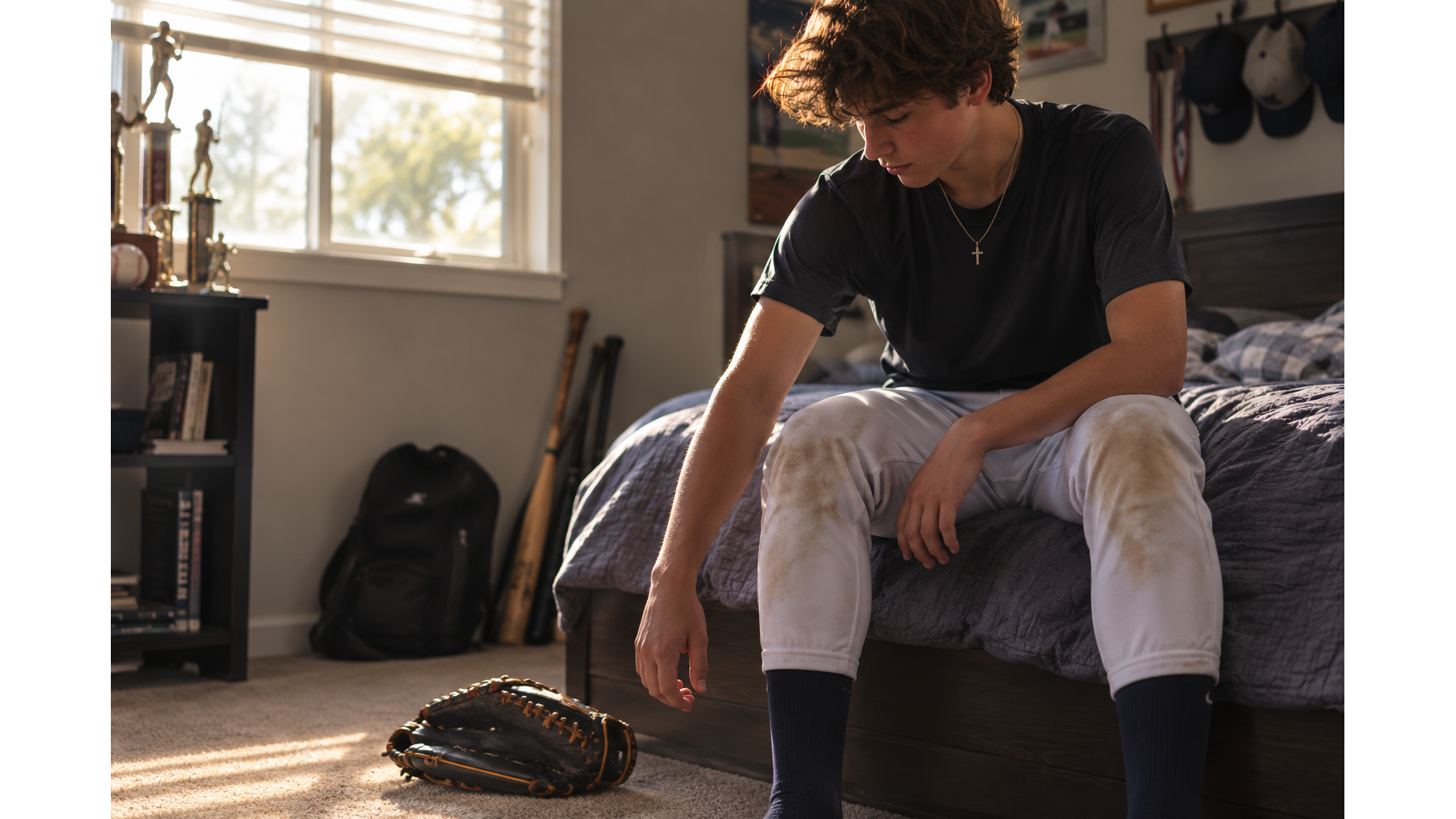
A young pitcher throws 45 pitches on Saturday, comfortably below the recommended limit. By Sunday morning, he complains that the inside of his elbow hurts. His parents followed the rules, so what went wrong?
This situation is familiar to many youth baseball families. Pitch counts provide important protection against overuse, but they cannot account for every throw a child makes throughout the week.
According to the youth arm health experts at VeloRESET, pitch counts are an important starting point, but they don’t tell parents how much throwing stress a child’s arm has experienced throughout the week. Considering total workload, arm readiness, and recovery can provide a clearer picture of whether a young pitcher is prepared for the next outing.
What Are the Early Symptoms of Little League Elbow?
Little League elbow is an overuse injury affecting the growth plate on the inside of a young pitcher’s elbow. It commonly develops gradually as repeated throwing places stress on tissue that is still growing.
According to the American Academy of Pediatrics, symptoms can include inner elbow pain, swelling, and discomfort that initially appears only during pitching.
Parents may also notice stiffness after games, tenderness around the inner elbow, or changes in throwing velocity.
These signs should not be dismissed as ordinary soreness. Localized elbow pain in a growing athlete warrants stopping throwing and arranging a medical evaluation.
Importantly, Little League elbow is different from a UCL injury associated with Tommy John surgery. Understanding that distinction can help parents respond appropriately without assuming every elbow complaint requires surgery.
Why Safe Pitch Counts Don’t Tell the Whole Story
Pitch count rules are designed to limit how many pitches young players throw during games. However, a pitcher’s arm experiences stress during other baseball activities too.
Consider a typical week. A child pitches on Saturday, attends practice on Monday, throws a bullpen on Wednesday, and plays shortstop on Friday.
Each activity adds to the total workload, even when individual outings appear reasonable.
This helps explain why youth pitcher inner elbow pain can develop despite compliance with game-day limits.
For parents, the important distinction is that meeting the recommended limit does not automatically mean the arm has recovered from everything else.
Why Growth Spurts Deserve Attention
Growth spurts introduce another factor that families may overlook.
During adolescence, bones can lengthen rapidly while surrounding muscles and connective tissues are still adapting. Growth plates remain particularly vulnerable to repeated throwing stress.
A pitcher who handled a demanding schedule comfortably several months earlier may respond differently after a period of rapid growth.
That does not mean every performance change or elbow complaint is caused by growing taller. However, recent physical development deserves consideration when parents review throwing activity and recovery.
When Should Parents Stop Their Child From Pitching?
One of the hardest decisions during baseball season is knowing when a child should sit out.
A young pitcher may insist that the discomfort is minor, especially before an important game. Parents may also feel reassured because the previous outing stayed within the recommended limits.
However, elbow pain should never be treated as something a player simply needs to push through.
Pain in a growing baseball player’s elbow should not be ignored. A healthcare professional can assess the symptoms and determine whether further evaluation is necessary.
An online assessment can help families organize observations about fatigue and workload, but it cannot determine whether a child has Little League elbow or is medically safe to continue pitching.
Why Recovery Matters After Medical Clearance
Even after a clinician approves a return to throwing, parents still need to consider how the arm responds to increasing activity.
Medical clearance and readiness for a demanding game schedule are not identical questions.
A gradual return allows families and healthcare professionals to monitor discomfort, changes in movement, and tolerance for increased throwing activity.
It also gives parents an opportunity to review whether the previous schedule included enough recovery between games, lessons, and practices.
Looking Beyond the Pitch Count
Pitch counts remain an important part of youth baseball safety, but they work best when parents also consider the full throwing schedule and their child’s recovery.
Recognizing Little League elbow symptoms early starts with taking inner elbow discomfort seriously, understanding the demands of repeated throwing, and knowing when professional evaluation is needed.
For additional information about workload, recovery, and everyday throwing decisions, parents can explore VeloRESET’s educational guide.
VeloRESET
8930 North 6th Street
Fresno
CA
93720
United States


